We launched at FAR
Lukas Erdmann
4 mins read
Published on November 27, 2024
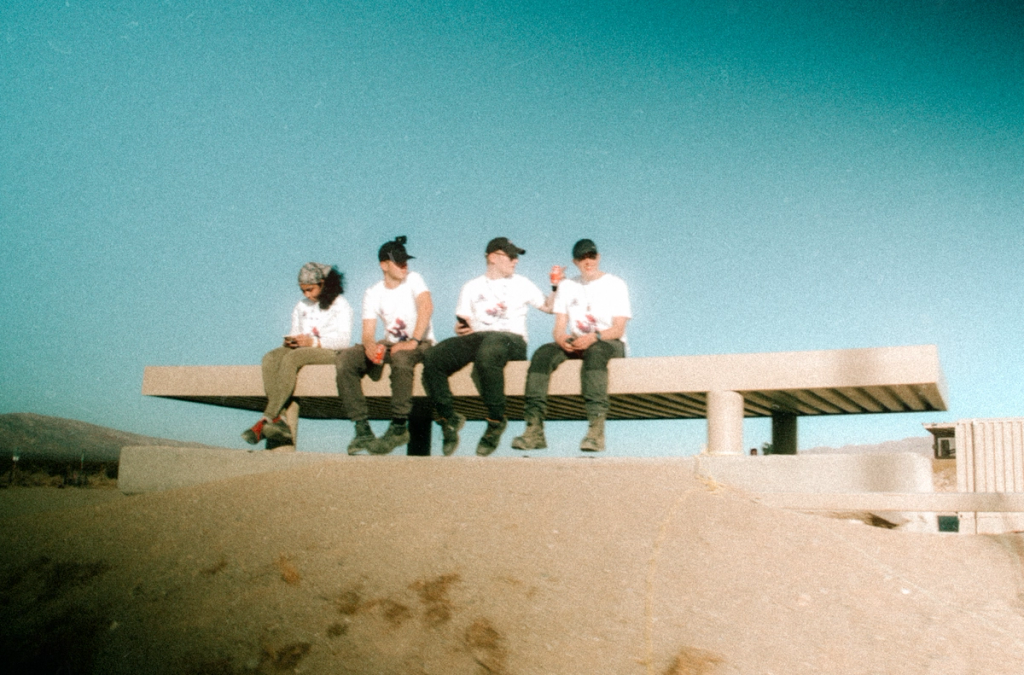
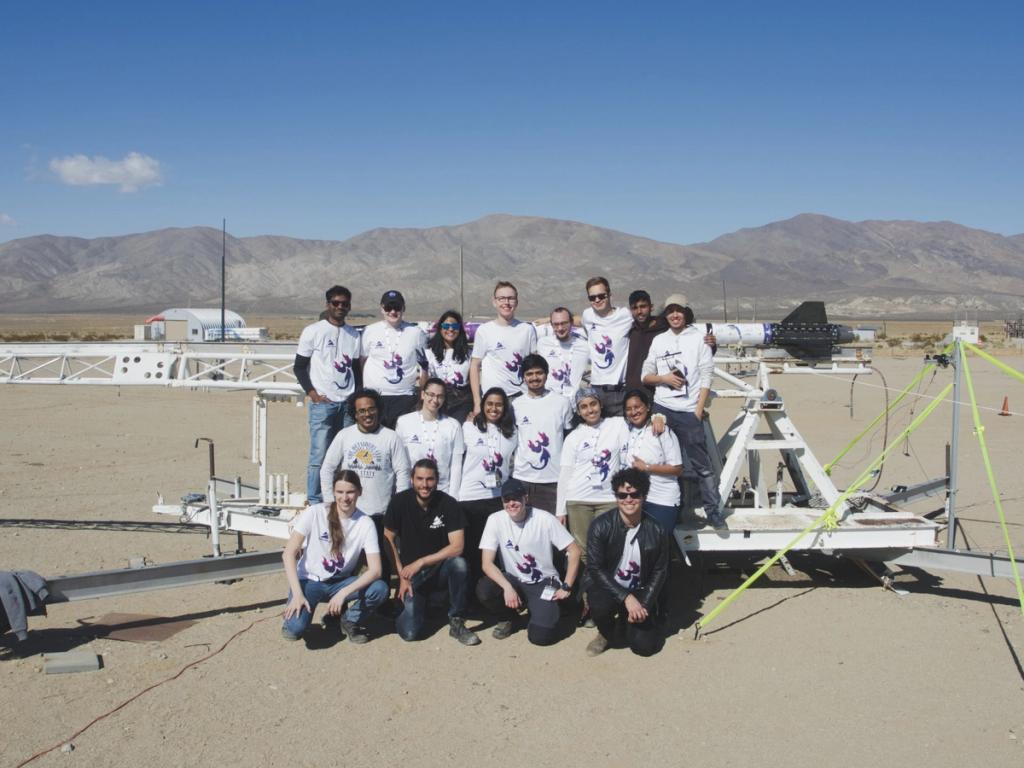
Last weekend, we had the incredible opportunity to launch our rocket Phoenix. For that, we flew to the launch site of the Friends of Amateur Rocketry in California and finally got to “Push the red button”.
But how did we get there? This is our story about the Phoenix launch campaign:
The very first thing we did was to send our Phoenix rocket to the US. We disassembled the parts around four weeks in advance, packed them into seven different crates and finally shipped them to the US. Our crates had a long journey ahead of them: due to some shipping problems, only 4 of the 7 crates arrived on schedule.
Two boxes arrived just before the launch, but we had to manage without the contents of the last box on the launch day itself. This almost derailed the launch, but with a lot of very dedicated work in the end our team managed to replace the missing parts, enabling us to launch.
Missing were most importantly our Ground Control Station and the rocket's fins. In two day and night shifts and several shopping trips, materials were collected, solutions devised and on the first light of the third day the team had managed to build a new ground station, albeit in a slightly more redneck fashion. Even the fins were recreated by a local craftsman.
And then, after extensive launch preparations and the launch countdown, at noon of Sunday, the 3rd of November, with a launch velocity of ~35 m/s and a thrust of ~3000N, Phoenix finally left the rail and took to the skies over California, reaching an altitude of about 1.5 km!
If you followed the development of our rocket you might know, this was well short of the 9 km of altitude we were aiming for. This is a result of two different circumstances.
First, we were missing parts of the Ground System and were under different atmospheric conditions compared to the hot fire tests. This made it necessary to load the rocket with less fuel compared to our previous estimations. With the adjustments made our maximum altitude would have been around 5 km.
The second reason is that our nose cone had an unscheduled separation shortly after engine cut-off. At the moment we assume the pressure differential between the avionics bay within the nose cone and the atmosphere became greater than the aerodynamic pressure pushing the nose cone onto the bulkhead after the engine cut off. This pulled the nose cone of which in turn deployed our parachute.
As the parachute is meant to deploy at much lower speeds, its lines snapped. Therefore the parachute couldn't catch the rocket during fall and it impacted rather violently on the desert floor.
Unfortunately, this also destroyed our Avionics systems and we thus have no recorded telemetry data. All flight data was calculated through analysis of video taken from the ground.
While on the surface this might sound a bit disappointing, all things considered this launch was still a big success! Our brilliant team managed to get our rocket flying despite missing some very crucial parts and that in an unbelievably short amount of time! This is a testament to the dedication all brought to the project and we can all be very proud of what was achieved!
The launch of Phoenix marks the first rocket launch in the 3 year history of ASTRA and we can use all that we've learned here to make our next project possible, our space shot Transcendence!
With Phoenix leaving the rail and flying to 1.5km after all, having managed all the operational difficulties surrounding such a launch, we've shown that we can achieve what we've set out to do! So with that, look forward to our next project and as always - Expand your Horizons!
Last updated on August 20, 2026
You might also like...
Our Propulsion Test Campaign in 2024
Lukas Erdmann
May 31, 2024
In May, the propulsion team of ASTRA achieved a very important milestone. The team successfully tested the propulsion system and fulfilled the require...
The new board for 2024
Lukas Erdmann
May 20, 2024
It is simply in the nature of working on a big project like ours as a student in your spare time that your availability can change without you being a...
Our year 2023
Almut Sann
January 4, 2024
In time for the new year, we want to take a look back at the year past. We have learned so much and grown beyond ourselves. We were able to celebrate ...